A year and a month ago I took off for Savannah, Georgia with two really fabulous people. I didn't really want to go. I didn't have my same sense of adventure at the time that I have now. I had been plotting all week about how to get out of it. I would be leaving my two children with my mom and my sister for three nights and four days. I was fairly recently separated, and I just wasn't in the mood for fun. But for all that, I think I shall never have a similar experience again. I was so shocked to have such an amazing time. Every moment there was new in a way that can probably never be repeated. And 100% honestly I did nothing illegal or even immoral (in my twisted sense of morality anyway) while I was there. No drugs (just a lot of alcohol) and no sex.
In any case, that trip birthed what we now call "the burning roman candle club." It was named a few weeks later by one of our number for the lines in Jack Kerouac's
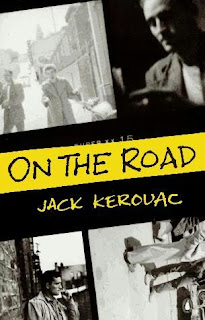
On the Road:
"the only people for me are the mad ones, the ones who are mad to live, mad to talk, mad to be saved, desirous of everything at the same time, the ones who never yawn or say a commonplace thing, but burn, burn, burn like fabulous yellow roman candles exploding like spiders across the stars and in the middle you see the blue centerlight pop and everybody goes 'Awww!'" (Kerouac 5-6).
Of course we came back from Savannah and dived right back into our normal (or not so normal) lives as graduate students at ASU. I had comprehensive exams to study for and a thesis to write. Kevin was bumming around Boone, much the same way he is now; although, I hear he's quit drinking, and Elitza was busy teaching and studying much the same as I was. My life would never be quite the same, and that was mostly because I decided I deserved a little fun before I got old. But I promised myself I would eventually read the book from which these lines came. And so I have, just tonight.
Amusingly enough, my friend Kamy told me that these lines are immensely popular among the ladies. "They ALL have them on their facebook pages," he tells me. It really doesn't surprise me. The only thing that's unique about any of us is that we are all unique, I suppose. Except when you're reading a book like this where all the characters are both unique and amoral. I say that with the highest sense of regard for Sal Paradise and Dean Moriarty.
There isn't much of a plotline in this book, but more ground is covered than in say,
Catcher in the Rye. Still, basically Sal hears about a guy named Dean. They meet up when Dean comes to New York with Mary Lou, his first wife. They become good friends and the rest of the novel is the story of Sal and Dean travelling around together and some separately. They go from New York to Denver to San Francisco, back to New York and even to Mexico. Dean is a completely free spirit, and it's hard not to like him, even though by the end of the book he is a virtual pariah in his social group because he leaves impregnated women behind everywhere he goes. He seems to care for people deeply but is too lost in his own little world to take on any responsibility at all. He takes three wives in the book, and he ends up with the second one. He becomes unreasonably angry with the first because she ends up sleeping with a number of other men. I can't imagine why that bothers him, but I guess he feels like these women are really his property once he has them.
Sal, who is a much easier character to get along with, supports Dean until the end, even after being left in Mexico extremely sick. Sal eventually "settles down" in New York, with what he considers a perfect woman for him.
I have seriously mixed reactions to this book. Part of me is soooo jealous that I wasn't born a man or at least hadn't kept myself unburdened long enough to behave like these men did for a while. But, another part of me feels like there is a (yuck) moral in there somewhere about burning the candle at both ends. Their life isn't sustainable. And Dean's biggest problem is that he keeps it up too long. I can totally see why this would be a guy's favorite book though. There is a great freedom in the way the guys behave, and somehow I feel like it should be some people's right. I don't judge Dean as harshly as say Galatea does, but I still feel like his woes were the reasonable consequence for his actions. He lived life hard, which would have been fine,
if he could have left women out of it. But once you swear undying love, take marriage vows, and impregnate someone, you're kinda responsible for them. It's a sad truth, and the acceptance of the sad truth is the tragedy of Dean's life. Sal, on the other hand, either does not know who he impregnated along the path or did not actually impregnate anyone, so he escapes the majority of the censure that is heaped upon Dean.
Somehow, though, the whole book feels like an elegy for the way Dean lived his life, as if in some alternate universe it really
should have been okay with everyone. And even though Sal settles down in the end, it doesn't feel like some great giving in to societal expectation but rather a rest after a hell of a roller coaster ride. I enjoyed reading this book though. There was relatively no conflict through most of it, but it was really an interesting read, especially for someone trying to understand the male mind.
 Weird!


 Pride and Prejudice has long been one of my favorite books. As a senior in high school, I read Wuthering Heights, Jane Eyre, and Pride and Prejudice. I can imagine it was a torturous reading list for the average seventeen-year-old boy, but I was in heaven. All this dramatic romance tickled me and, in many ways, rekindled my faith that literature could be fun to read. I had always done well in English, but years of Animal Farm, Lord of the Flies, and One Flew Over the Cuckoo's Nest had left me slightly unwilling to take my required reading to bed with me. The texts I read in my senior year did much to make up for the more depressing things we read.
 A year and a month ago I took off for Savannah, Georgia with two really fabulous people. I didn't really want to go. I didn't have my same sense of adventure at the time that I have now. I had been plotting all week about how to get out of it. I would be leaving my two children with my mom and my sister for three nights and four days. I was fairly recently separated, and I just wasn't in the mood for fun. But for all that, I think I shall never have a similar experience again. I was so shocked to have such an amazing time. Every moment there was new in a way that can probably never be repeated. And 100% honestly I did nothing illegal or even immoral (in my twisted sense of morality anyway) while I was there. No drugs (just a lot of alcohol) and no sex.
 The Catcher in the Rye is one of those books that sits on your shelf and whenever you told people, "I've never read it," they looked at you with this shocked look, and ask, "Are you really an English major?" So, I caught up with Salinger, and I read The Catcher in the Rye. It was really quite interesting.


